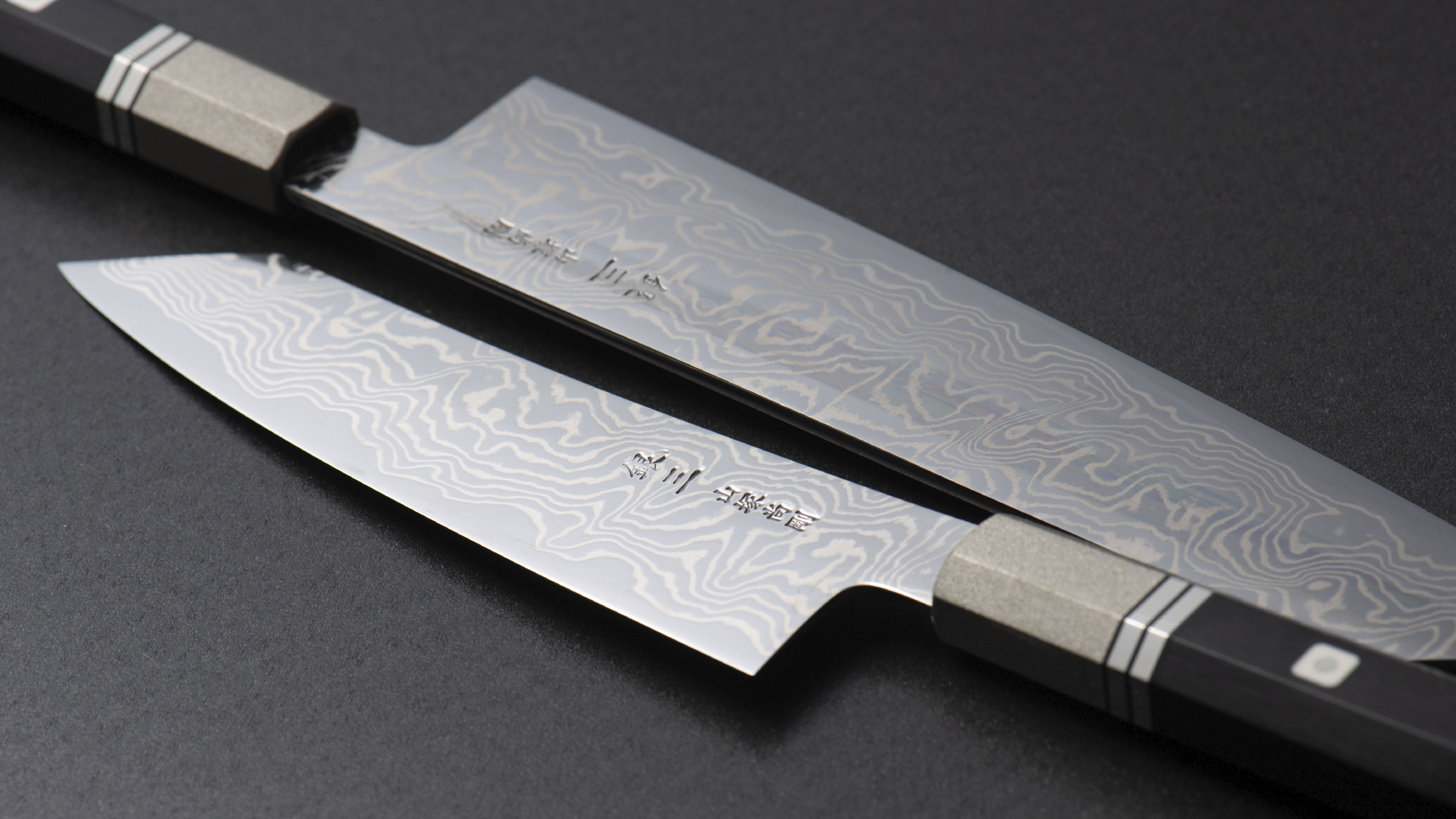
When choosing a Japanese knife, many people struggle to decide between the razor-sharp edge of carbon steel and the low-maintenance, rust-resistant nature of stainless steel.
Ginsan Steel (Silver 3 / Ginsanko) is the ultimate solution that offers the best of both worlds.
In this article, we explain the unique characteristics, advantages, and drawbacks of Ginsan steel to help you decide if it is the right choice for you.
What is Ginsan Steel?
Ginsan Steel (officially known as Silver Paper No. 3) is a high-grade stainless steel developed by Hitachi Metals (now Proterial).
It contains a carbon content similar to traditional carbon steel (such as White Steel), giving it exceptional hardness and sharpness, while added chromium provides strong resistance to rust.
Pros of Ginsan Steel
-
Sharpness Comparable to Carbon Steel
Despite being stainless steel, it delivers a razor-sharp edge that glides through ingredients without damaging delicate food fibers—perfect for sashimi and precision vegetable cutting.
-
Rust-Resistant & Easy to Maintain
Unlike carbon steel, which can rust quickly if left wet, Ginsan steel resists moisture and salt, making it highly practical for busy professional kitchens and home cooks alike.
-
Easier to Sharpen than Other Stainless Steels
Compared to harder stainless alloys like VG10, Ginsan steel responds much better to whetstones, allowing for smoother and easier re-sharpening.
-
No Metallic Odor or Food Discoloration
It does not react with acidic ingredients (like lemons or tomatoes), preventing metallic tastes or unwanted discoloration on your food.
Cons of Ginsan Steel
-
Higher Price Point
Due to the cost of raw materials and the high level of skill required for forging and heat treatment, Ginsan steel knives are generally more expensive than standard stainless options.
-
Quality Depends Heavily on the Craftsman
Ginsan steel is notoriously difficult to heat-treat. Its true flexibility and sharpness can only be unlocked through the hands of a master blacksmith, such as Sakai’s certified master craftsman Shogo Yamatsuka.
-
Sharpening Feeling Differs Slightly from Carbon Steel
Compared to pure carbon steel (like White Steel), it can feel slightly slippery on a whetstone until you get used to it.
Who Should Choose Ginsan Steel?
-
Those who want the sharpness of a traditional Japanese knife without worrying about rust.
-
Professional chefs looking to minimize tool maintenance in a fast-paced kitchen.
-
Anyone looking for a premium, lifelong Japanese knife that is both practical and high-performing.
Conclusion
Ginsan steel is the ideal choice for those who refuse to compromise on sharpness or ease of use.
At our store, we offer top-tier Ginsan steel knives individually forged by Master Shogo Yamatsuka in Sakai. Experience the pinnacle of Japanese craftsmanship today.