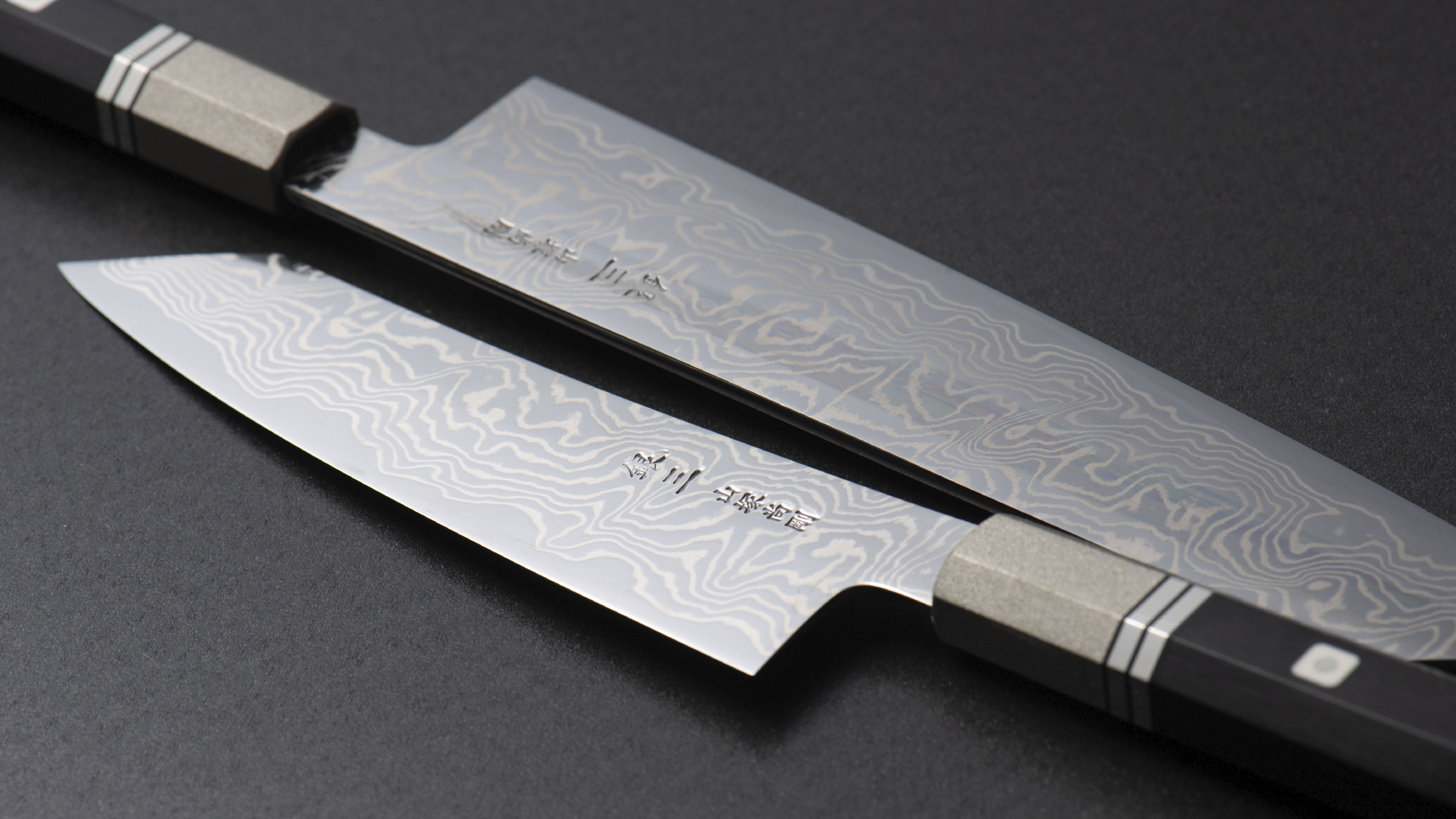
"Razor-sharp like high-carbon steel, yet resistant to rust like stainless steel"—among the handcrafted knives forged by Sakai traditional craftsman Shogo Yamatsuka, Ginsan Steel (G3) stands out as a favorite among professional chefs.
While Ginsan Steel is celebrated for its ease of maintenance, proper daily care and regular whetstone sharpening are essential to preserving its true performance—its remarkable edge retention and effortless cutting feel—for decades to come. This guide covers everything from routine maintenance to step-by-step whetstone sharpening techniques for beginners.
1. Daily Care to Preserve Ginsan Steel Performance
Although Ginsan Steel is highly rust-resistant, it is not completely immune to discoloration or corrosion. Follow these three essential steps to maintain its immaculate condition:
-
Wash with warm water and mild dish soap after use
Thoroughly remove food oils and acidic residues. Never put your knife in a dishwasher, as high heat and harsh detergents can warp the handle and chip the edge.
-
Wipe completely dry
After washing, use a dry cloth to wipe away all moisture from the tip down to the handle base. Pay extra attention after cutting citrus or salty ingredients.
-
Store in a well-ventilated area
Ensure the blade is completely dry before placing it in a sheath, block, or box. Applying a thin coat of food-grade mineral oil is recommended for long-term storage.
2. When to Sharpen Your Knife
If you are unsure when it is time to sharpen, look for these common indicators:
-
The blade slips on tomato skin instead of slicing smoothly.
-
Long green onions remain connected at the bottom after cutting.
-
Raw poultry skin or tough meat fibers become difficult to slice cleanly.
Thanks to its exceptional hardness and edge retention, a Ginsan Steel knife only requires sharpening once every 1 to 2 months for home cooking, or once a week for professional kitchen use.
3. Step-by-Step Whetstone Sharpening for Beginners
What You Need:
-
Medium Whetstone (#1000 grit): For regular maintenance
-
Finishing Whetstone (#3000–#6000 grit): For an ultra-smooth, refined edge
-
Damp towel (to prevent the whetstone from slipping)
Sharpening Process:
-
Soak the whetstone
Submerge the stone in water for 10 to 15 minutes until air bubbles stop rising.
-
Set a consistent angle (15 degrees / thickness of two coins)
Maintain a gap equal to two stacked coins between the blade spine and the stone. Keeping this angle constant throughout the stroke is the key to a sharp edge.
-
Sharpen the front side (form a burr)
Divide the blade into sections from heel to tip, sharpening each evenly. Continue until you feel a rough wire edge (burr) along the opposite side of the blade.
-
Remove the burr on the back side
Flip the knife over and lie it nearly flat against the stone (about the thickness of one coin). Gently stroke the blade a few times to remove the burr created in step 3.
-
Finish and test
Rinse the knife, wipe it dry, and test the edge on a tomato or a sheet of newspaper to ensure a smooth, effortless cut.
4. Why Shogo Yamatsuka’s Ginsan Steel is Effortless to Sharpen
Conventional stainless steel knives often feel "gummy" during sharpening, making it difficult to achieve a crisp edge or remove the burr.
However, Ginsan Steel forged by Shogo Yamatsuka undergoes meticulous heat treatment and forging processes that refine its molecular structure. As a result, it offers a unique advantage: it is hard and long-lasting, yet bites smoothly into the whetstone, allowing you to sharpen it with the satisfying feel of carbon steel.
Summary: A Lifetime Companion with Proper Care
With proper daily care and routine sharpening, a Ginsan Steel knife becomes a reliable tool capable of serving you for a lifetime—even in demanding professional kitchens.
If you ever lack the time to sharpen your knife or encounter severe edge damage, we offer professional sharpening and maintenance services at our official store. Please feel free to reach out to us anytime.