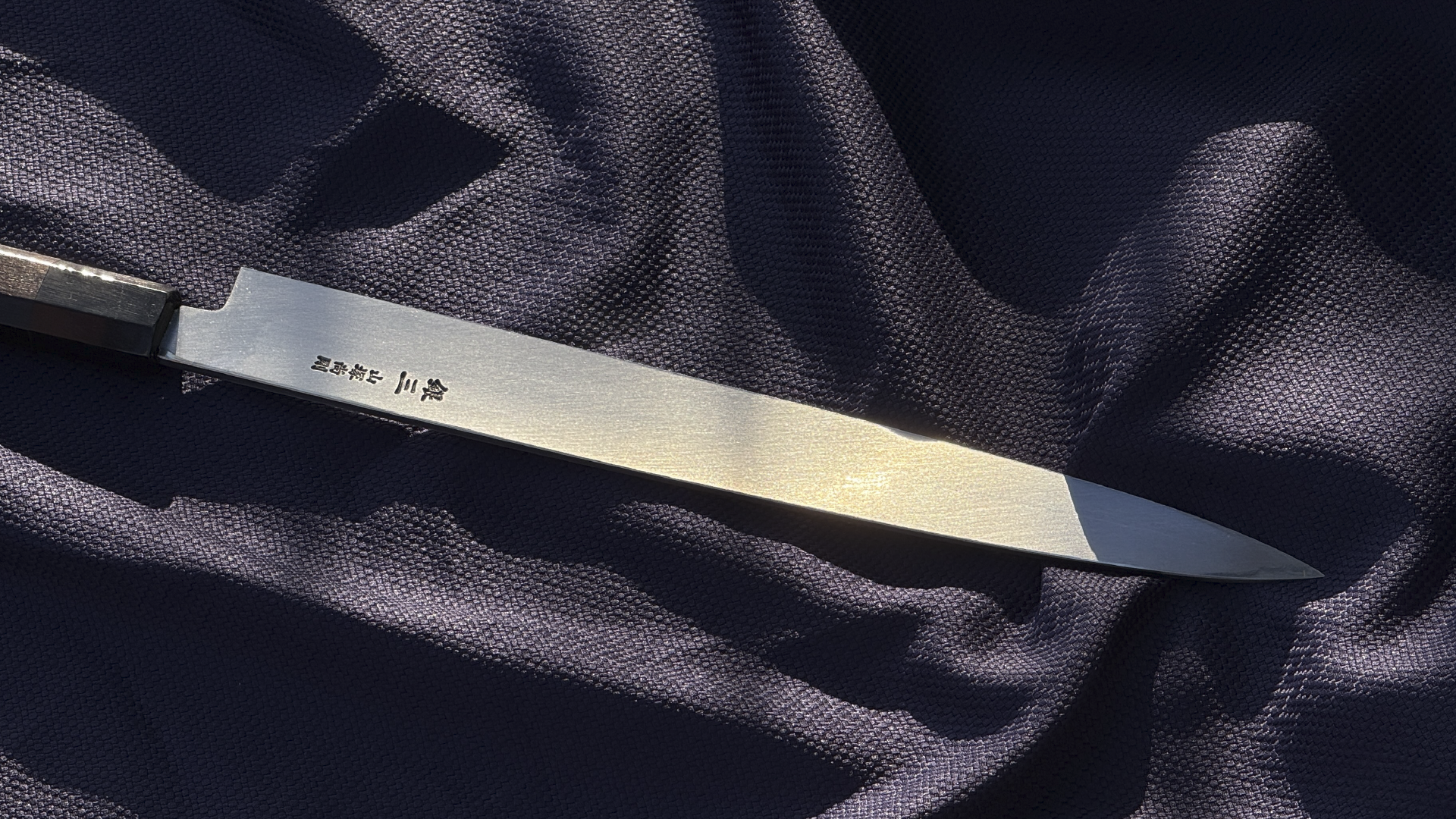
Handcrafted by Sakai’s traditional master craftsmen, Japanese knives (Wa-bocho) are renowned worldwide. However, when choosing your first knife, it can be tricky to decide which type to start with or what blade length fits your needs.
Japanese knives are precisely engineered in shape and bevel structure for specific tasks. This guide breaks down the main types of Japanese knives and how to choose the perfect size for home or professional kitchens.
1. Types of Japanese Knives and Their Roles
Yanagiba (Sashimi Knife) – For Beautifully Sliced Raw Fish
-
Features: A delicate single-bevel blade with a long, slender design.
-
Best Used For: Slicing raw fish for sashimi. The single edge cuts through fish fibers cleanly without crushing them, preserving texture, shine, and flavor.
Takobiki – Kanto-Style Sashimi Knife
-
Features: A traditional sashimi knife with a square, blunt tip.
-
Best Used For: Similar to the Yanagiba, it is designed for slicing sashimi and delicate seafood like octopus while minimizing the risk of scratching the cutting board with the tip.
Kiritsuke Yanagiba – Elegance Meets Precision
-
Features: A Yanagiba featuring an angled, sword-like (reverse tanto) tip.
-
Best Used For: Slicing sashimi with style while allowing the ultra-sharp tip to perform intricate decorative cutting and prep work. Extremely popular among international chefs.
Deba – Heavy-Duty Fish Butchery
-
Features: A thick, heavy single-bevel blade.
-
Best Used For: Beheading, gutting, and filleting whole fish. The thick heel handles bones with ease, while the tip performs precise filleting.
Usuba – For Precision Vegetable Work
-
Features: A thin, straight single-bevel blade.
-
Best Used For: Intricate vegetable slicing, mincing, and decorative cutting like Katsuramuki (rotary peeling). The razor-thin edge prevents vegetables from cracking or bruising.
Gyuto – The Versatile Western-Style Japanese Knife
-
Features: A double-bevel blade with a pointed tip, similar to a Western chef's knife.
-
Best Used For: An all-rounder for meat, vegetables, and fish fillets. It offers the superior sharpness of Japanese steel with the versatility needed in Western kitchens.
Sujihiki – Precision Meat Slicer
-
Features: A long, narrow double-bevel knife.
-
Best Used For: Trimming fat and sinew from large meat cuts and producing clean, thin slices of roast beef or proteins.
Petty (Utility Knife) – Compact & Agile
-
Features: A small, double-bevel utility knife.
-
Best Used For: Peeling fruits, trimming small vegetables, garlic prep, and detail work. Perfect as a secondary knife or a primary tool for compact kitchens.
2. How to Choose the Right Blade Size
The ideal knife size depends on two factors: the size of the ingredients and your workspace.
| Knife Type | Professional / Restaurant Use | Home Use / Easy Handling |
| Yanagiba / Takobiki / Kiritsuke |
270mm – 300mm Slices large blocks in one single stroke |
210mm – 240mm Fits comfortably on standard home cutting boards |
| Deba |
165mm – 180mm Handles medium to large fish |
150mm Ideal for everyday fish processing |
| Usuba |
195mm – 210mm Efficient for high-volume prep work |
165mm – 180mm Easy to maneuver in home kitchens |
| Gyuto / Sujihiki |
240mm – 270mm Offers speed and reach for prep |
210mm The most balanced size for any hand size |
| Petty |
150mm Versatile for larger fruits and small proteins |
120mm – 135mm Agile and perfect for handheld cutting |
3. Summary: Finding Your Perfect Knife
-
For fish filleting & sashimi: A combination of Deba (150–165mm) and Yanagiba (240mm).
-
For everyday multi-purpose cooking: A Gyuto (210mm) or double-bevel Wa-bocho.
On our site, we offer a wide range of sizes and handcrafted Japanese knives, each forged and sharpened by master artisans. Custom sizes and specifications are also available upon request. Please feel free to reach out to us with any inquiries.