Learn the difference between single-bevel and double-bevel Japanese knives, including their uses, cutting characteristics, sharpening needs, and how to choose the right knife for your cooking.
Article
When choosing a Japanese knife, one of the first things to understand is the difference between a single-bevel and a double-bevel edge.
Neither is inherently better than the other. The right choice depends on what you cook, how you like to work, and your experience with knives.
This guide explains the characteristics of each edge and how to choose the right knife for your kitchen.
What Is a Single-Bevel Knife?
A single-bevel knife has its primary cutting edge ground on one side of the blade. The reverse side has a slight concave surface, known as the ura, which affects how the blade releases from food and how cleanly it cuts.
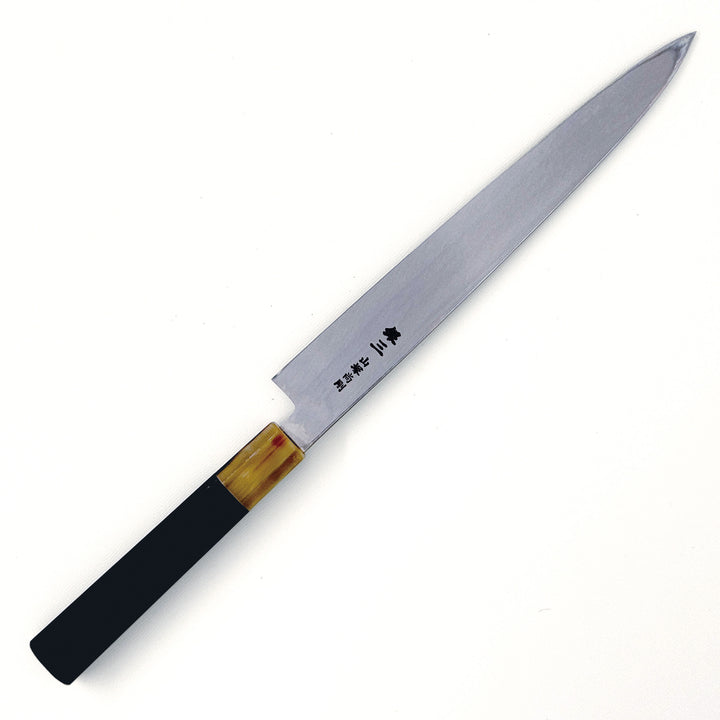
Common examples include yanagiba knives for slicing sashimi, usuba knives for vegetables, and deba knives for preparing fish. Each is designed for a specific task: slicing fish, filleting, or precise vegetable work.
The Advantages of Single-Bevel Knives
-
They can create exceptionally clean cuts and smooth surfaces.
-
They are well suited to precise work with fish and vegetables.
-
Choosing a knife designed for a specific task can improve accuracy and control.
Single-bevel knives are made for either right-handed or left-handed use, so it is important to choose the correct version. They also require a specific sharpening approach to maintain both the edge and the ura. For a first single-bevel knife, it is best to begin with a clear purpose in mind.
What Is a Double-Bevel Knife?
A double-bevel knife is sharpened from both sides of the edge. Because both sides of the blade meet at the cutting edge, it is easy to guide straight through food and comfortable for both right- and left-handed users.
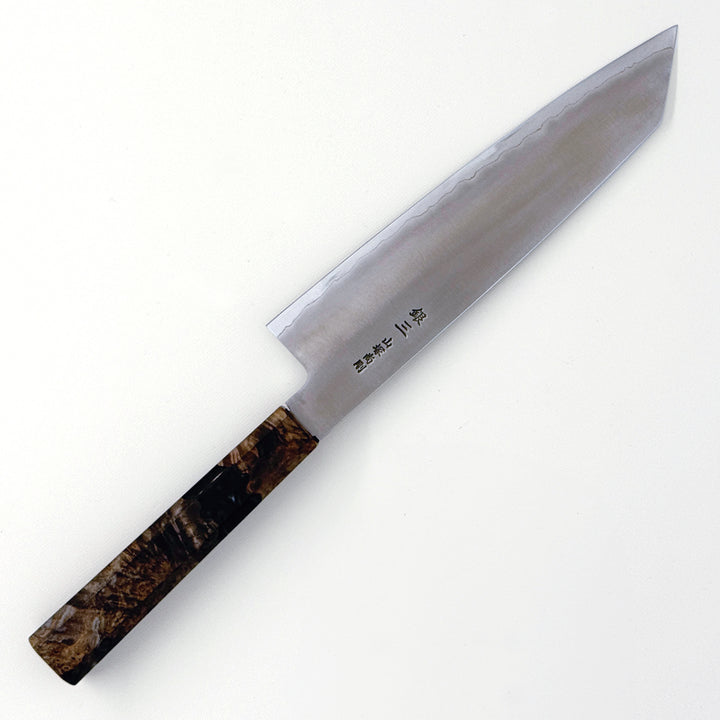
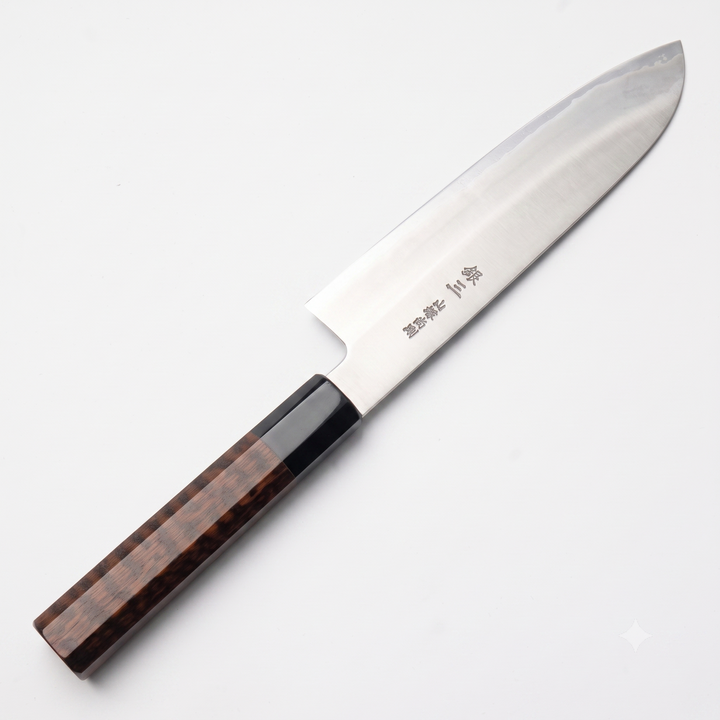
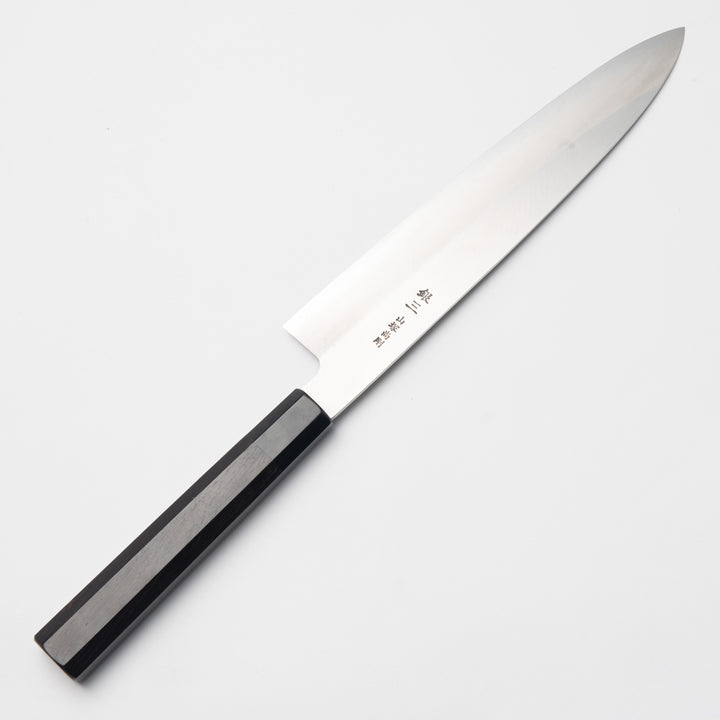
Gyuto, santoku, and petty knives are common double-bevel knives. They are used for meat, fish, and vegetables, making them suitable for everyday cooking at home as well as in professional kitchens.
The Advantages of Double-Bevel Knives
-
One knife can handle meat, fish, and vegetables.
-
They are suitable for both right- and left-handed users.
-
Their sharpening method is comparatively easy to understand.
-
They are an approachable choice for a first high-quality Japanese knife.
A gyuto is especially versatile. It can handle detailed work with the tip as well as everyday prep such as cutting meat and vegetables. Yamatsuka’s 210mm Ginsan Gyuto is also double-bevelled, making it an excellent choice for those looking for their first serious Japanese knife.
Which Should You Choose?
The best choice comes down to what you want to cut and how you want to cook.
-
For beautifully sliced sashimi or fish preparation: choose a single-bevel knife such as a yanagiba or deba.
-
For a single knife that handles meat, fish, and vegetables: choose a double-bevel knife such as a gyuto or santoku.
-
For your first serious Japanese knife: start with a double-bevel gyuto or santoku.
A single-bevel knife is a specialist tool for refining a particular type of cooking. A double-bevel knife is a versatile tool that supports everyday preparation across many ingredients. Choosing the shape that suits your cooking is the first step toward using and enjoying a knife for many years.
Choosing a Yamatsuka Knife
Yamatsuka offers both single-bevel knives, including yanagiba, and double-bevel knives such as gyuto and santoku.
If you are unsure which knife is right for you, please contact us with the ingredients you prepare most often, your dominant hand, and the size of the knife you currently use. We will be happy to help you find the right knife for your needs.