When browsing high-end Japanese kitchen knives, many buyers notice a significant price gap between standard Damascus blades and Nickel Damascus blades.
Is this price difference purely about visual appeal, or does it reflect deeper manufacturing differences and cutting performance?
In this article, we explain the technical reasons behind the higher cost of Nickel Damascus, compare its specifications with standard Damascus, and explore the true value of this exceptional craft.
1. Three Reasons Why Nickel Damascus Is More Expensive
The higher price of Nickel Damascus comes down to rare materials and the extraordinary labor required from master blacksmiths.
-
1. High Raw Material Costs (Pure Nickel & Alloys)
Standard Damascus steel is created by layering different types of common stainless or carbon steels. Nickel Damascus, however, incorporates layers of high-purity nickel alloys—a rare and significantly more expensive metal. This material cost creates a price difference before forging even begins.
-
2. Extreme Forging & Welding Complexity
Welding stainless steel (iron-based) and nickel together is exceptionally difficult. Both metals have different thermal expansion rates and optimal welding temperatures. Joining them seamlessly without internal air pockets or delamination requires precise temperature control and master-level hammer technique.
-
3. Intricate Acid-Etching & Hand-Finishing
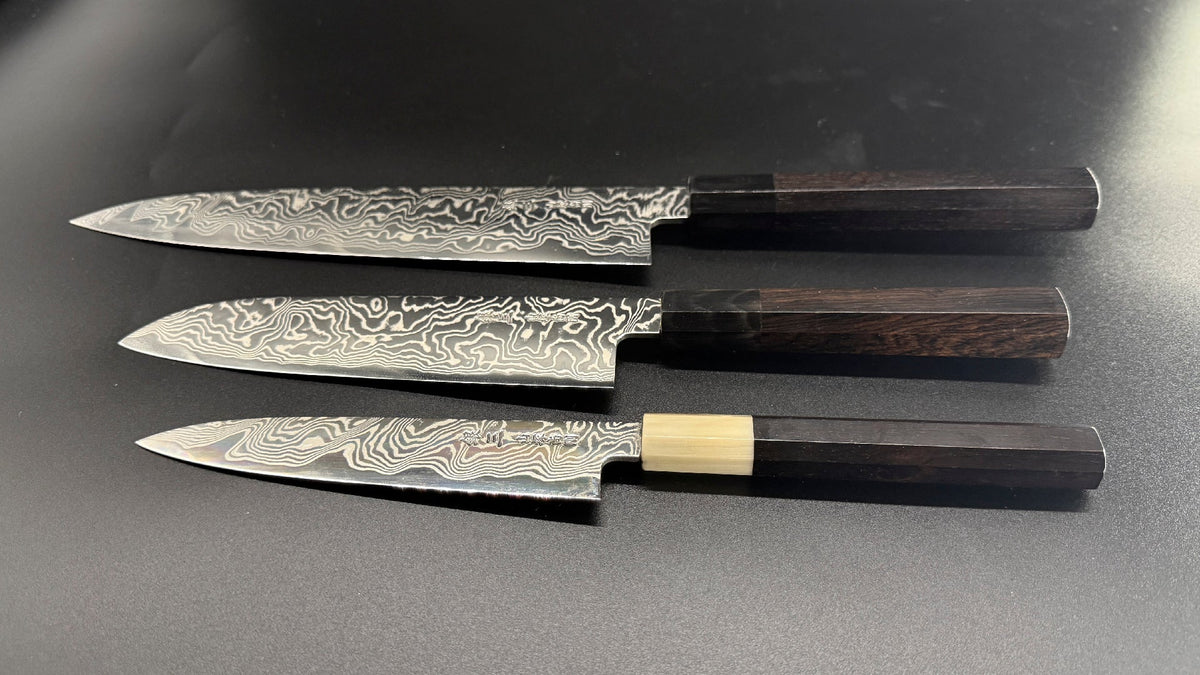
The striking "black and white" contrast is achieved through a delicate acid-etching process. While the stainless steel layers react to the acid and darken, the nickel layers resist the acid and maintain a brilliant silvery-white sheen. Achieving a crisp, uniform three-dimensional pattern without over-etching requires extensive hand-polishing and skill.
2. Standard Damascus vs. Nickel Damascus Comparison
| Feature | Standard Damascus | Nickel Damascus |
| Core Cutting Steel | Premium Steel (e.g., Ginsan, VG10) | Premium Steel (e.g., Ginsan, VG10) |
| Grind & Blade Profile | Master-sharpened geometry | Master-sharpened geometry (Identical) |
| Visual Contrast | Subtle, elegant gray-on-gray waves | Vivid, high-contrast "white and black" waves |
| Crafting Difficulty | High | Extremely High (Time & skill-intensive) |
3. Does It Affect Cutting Performance or Resharpening?
In short: No. There is no difference in cutting performance, blade profile, or ease of sharpening.
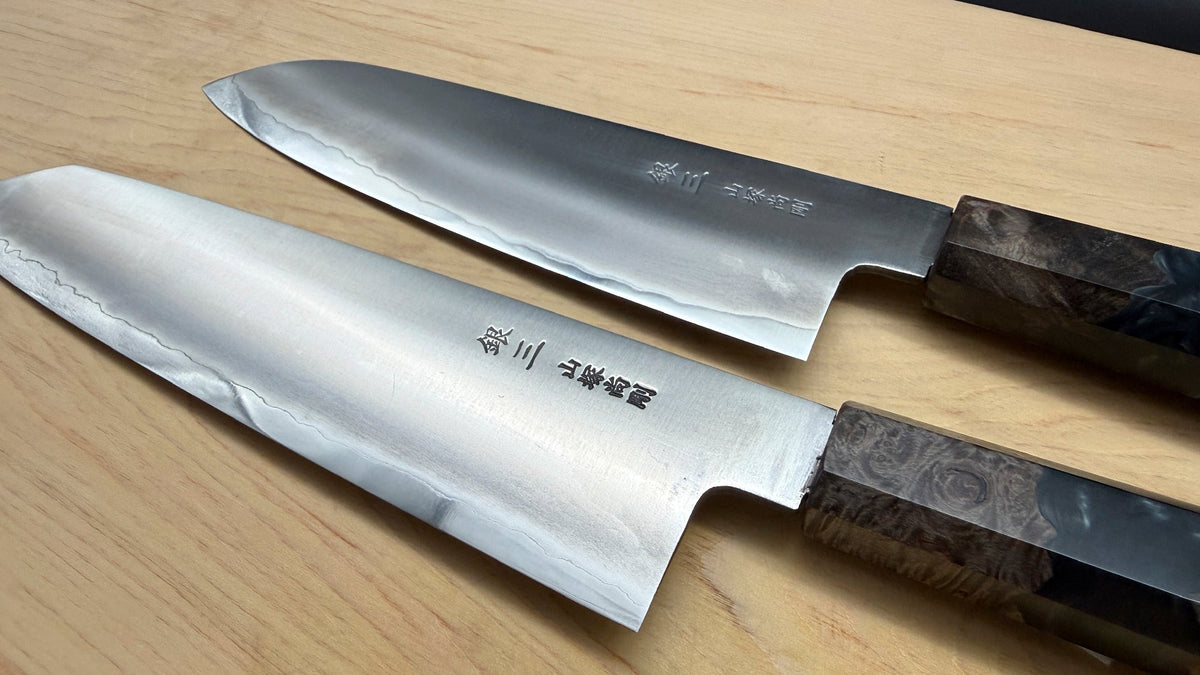
The Damascus pattern exists solely on the outer cladding (jigane). The core steel responsible for the actual cutting edge (such as Ginsan / Silver #3) remains identical. Whether forged by Master Shogo Yamatsuka and sharpened by Fujii Hamono, both versions deliver the exact same world-class cutting performance.
Summary: Why Nickel Damascus Commands a Premium Price
The higher price of Nickel Damascus is not just a markup for brand name or decoration. It is expensive because it incorporates costly rare metals, carries a high risk of failure during complex forge-welding, and requires extensive time for hand-finishing.
For those seeking a functional masterpiece with unrivaled visual impact and prestige, Nickel Damascus offers value and pride of ownership that fully justifies the investment.