Japanese knives of a similar shape and size can have very different prices. Have you ever wondered what sets them apart, or which one would suit you?
Price reflects several factors, including materials, size, handle and finish. How the blade is made is one of them.
This article introduces two terms that help explain that difference: Honyaki and Awase. Both describe ways of making Japanese knives.
Understanding their characteristics gives you more than a price comparison. It helps you think about which knife fits your cooking and the care you are comfortable with.
How can the construction of a blade differ?
A knife’s cutting edge is made from steel, a metal that can be hardened. Using that steel on its own or combining it with another metal is the basic structural difference between Honyaki and Awase.
| Construction | Basic structure |
|---|---|
| Honyaki | The blade is made from one type of steel. |
| Awase | Hard cutting-edge steel is combined with a relatively softer supporting metal. |
“One type” refers to the material. Even within a single blade, heating and cooling can produce differences in properties such as hardness.
What is Honyaki? A blade made from a single steel
A Honyaki blade is made from the blade steel itself, without adding a layer of softer supporting metal.
Its manufacture includes forging, which means heating and hammering metal into shape, and hardening, which involves cooling heated steel to develop hardness. Controlling the shape and hardness takes skill and time.
However, not every knife made from a single type of steel is called Honyaki. The manufacturing method and the specifications of the particular knife also matter.
Honyaki is not the name of a steel. Alongside versions made from rust-prone steels such as Shirogami, there are Honyaki knives made from Ginsan, a rust-resistant stainless steel.
What is Awase? Metals with different roles, combined
Awase construction combines hard steel at the cutting edge with a relatively softer metal that supports it. This supporting metal is called jigane in Japanese, or cladding.
For example, a blade may have two layers, with steel joined to cladding on one side, or three layers, with steel between cladding on both sides. The arrangement depends on the knife and its manufacturing method; not all Awase blades have the same number of layers.
You may also see the word kasumi, meaning “mist”. It is used to describe laminated Japanese knives, but also relates to the misty-looking finish given to the cladding.
It helps to distinguish Awase, which describes construction, from the way a blade’s surface is finished.
Three points to compare before choosing
Construction alone does not determine cutting performance
How a knife enters food and how long its edge lasts depend on the steel, heat treatment, blade thickness and sharpening, among other factors.
There is no universal ranking in which Honyaki always cuts better and Awase always performs less well. Both are used by professional cooks in daily work.
Think about whether you want to slice sashimi thinly or chop vegetables, for example. Even within the same construction, a knife needs a shape and length suited to the task.
Consider the work involved in resharpening
A knife’s edge gradually wears down with use. Resharpening means removing a little metal and reshaping that edge to restore its sharpness.
Because Honyaki has no softer cladding, sharpening broad areas of the blade to maintain its shape tends to require more work and skill than with Awase. An Awase knife’s hard cutting-edge steel is not necessarily easy to grind, either.
The work involved depends on the area being sharpened, the steel and how the edge is formed. Whether you plan to sharpen it yourself or use a specialist, ask about maintenance before buying.
Check the materials to understand rust resistance
Honyaki does not automatically mean rust-prone, and Awase does not automatically mean rust-resistant.
Ginsan, for example, resists rust. With an Awase knife, however, you need to check the cladding as well as the cutting-edge steel. Rust-resistant edge steel can be combined with a metal that is more prone to rust.
For either construction, the basics are to wash away food residue, dry the knife and store it dry after use.
Choosing a knife for the way you cook
When choosing a good kitchen knife, start with these three points:
- The food you usually prepare and the dishes you want to make.
- The blade length and weight you find comfortable.
- Whether you will sharpen it yourself or consult a specialist.
If everyday practicality and a broad range of options are priorities, Awase is worth considering. If you are also interested in construction and finishing, and want to include maintenance in your experience of owning a knife, Honyaki may be an option too.
Honyaki can be expensive because of the work involved in making and finishing it. Price also varies with the steel, size, handle and finish, so construction alone is not enough to judge a knife.
Explore Yamatsuka’s knives
At Yamatsuka, we offer knives crafted by Shogo Yamatsuka, a blacksmith in Sakai. A blacksmith heats, hammers and heat-treats metal to create the foundation of a blade.
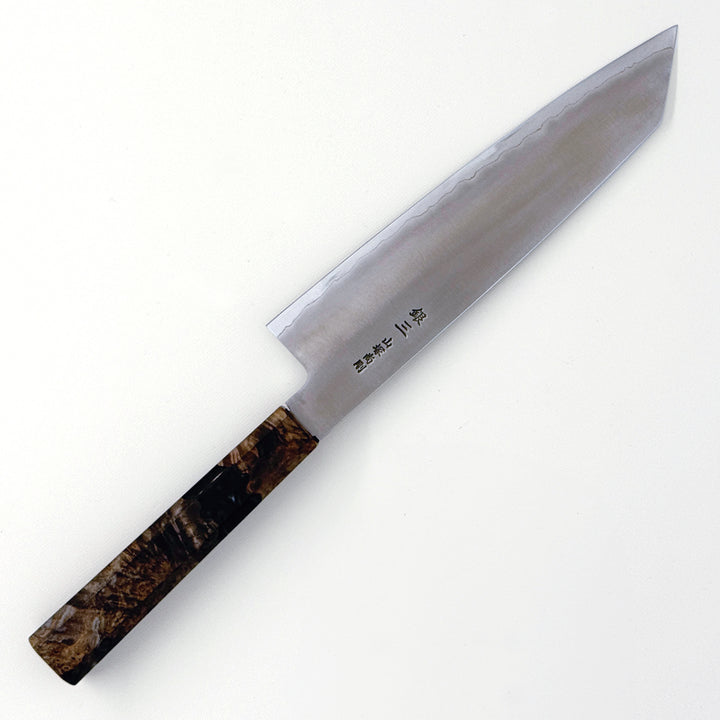
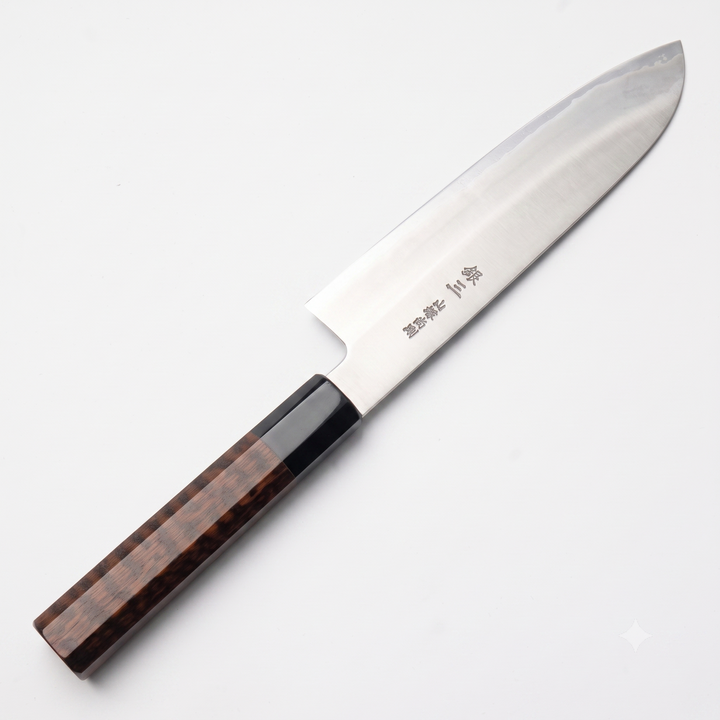
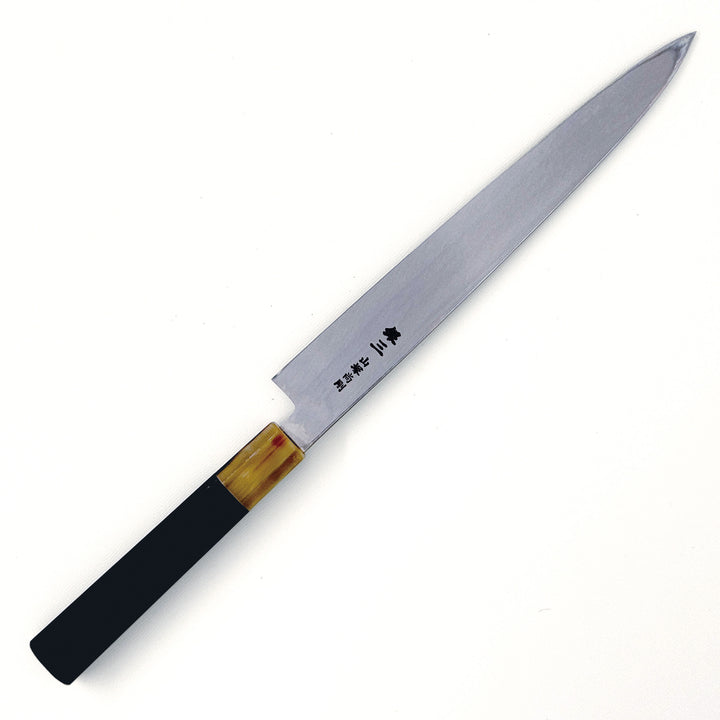
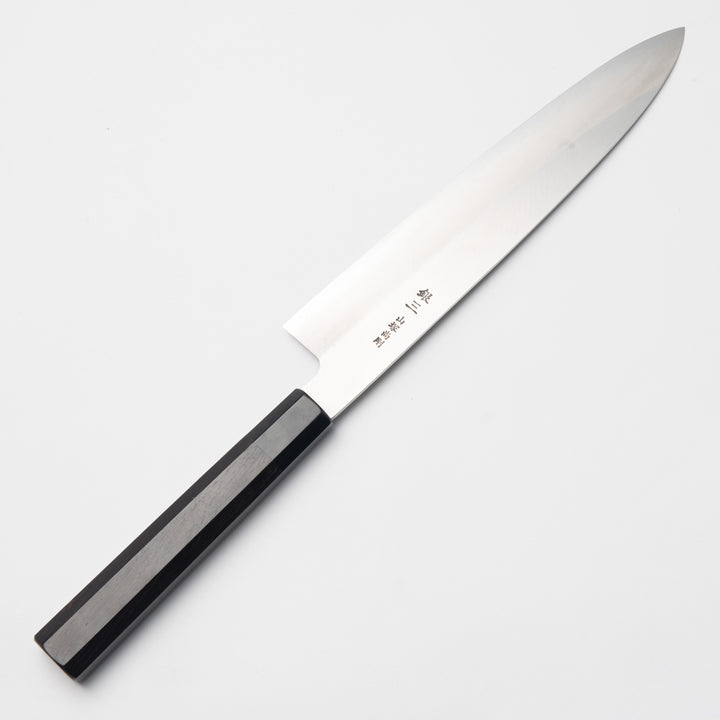
Ginsan Honyaki is one of the options. Compare shapes, sizes, materials and finishes to find a knife suited to your cooking.
If you would like help choosing, please contact us. Tell us about your cooking, the knife you currently use and your sharpening experience so we can guide you.