
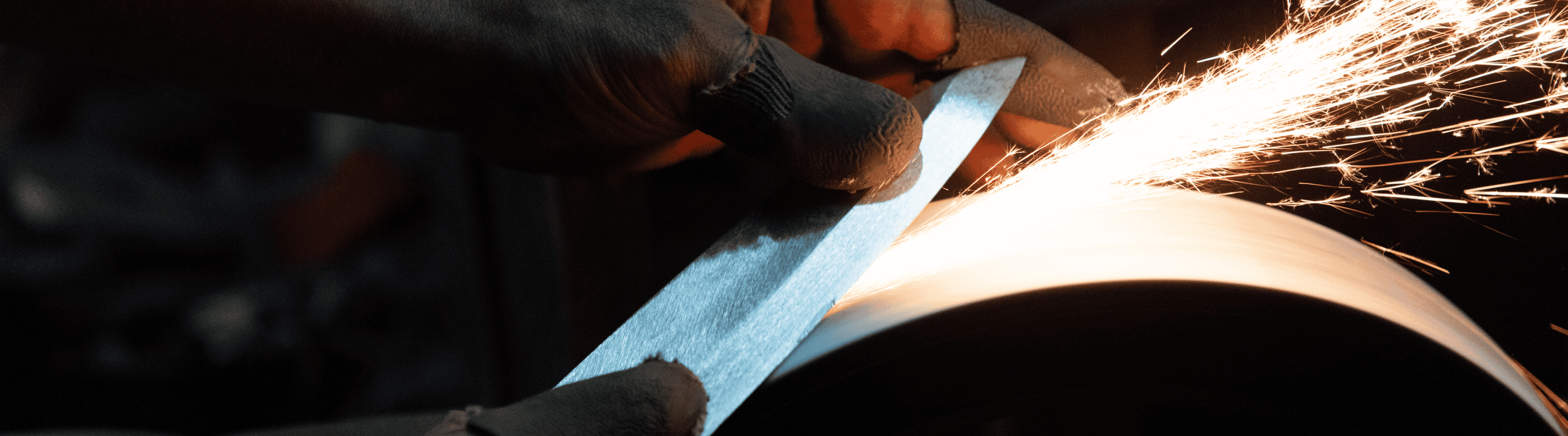
日本伝統鍛冶の600年
大阪・堺に息づく刃物作りの技は、単なる産業ではない。それは祈りである。日本人の精神そのものを、現代へと受け継ぐための祈りなのだ。
その起源は5世紀、この地に今も残る巨大な古墳を築くために、鉄の道具が鍛えられた時代へと遡る。以来、幾世代もの職人たちがこの地に集い、技を磨き、途切れることなく未来へと紡いできた。
堺の包丁を手にすることは、単に道具を所有することではない。歴史のひとかけらを、その手のひらに包み込むということなのだ。600年もの間、これらの刃物は日本の食文化を底流で支え、世界中のトップシェフから揺るぎない信頼を勝ち得てきた。
その誇りは、今も一本一本の包丁の中に、確かに生きている。

(日本山海名物図会)
選ばれし者のための、手仕事の結実 —— 誇りと希少性
市場に流通する包丁の大半が大量生産される現代において、堺の包丁は異彩を放つ。その生産量は、日本の包丁全体から見ればごくわずかな量に過ぎない。しかし、厳しい美意識と精度が求められるプロの和食料理人の世界では、実に90%以上がこの堺の包丁を選び取っている。
機械での大量生産を拒み、職人が一丁ずつ手作業で命を吹き込むため、年間に作れる数には限界がある。しかし、だからこそ堺の包丁は単なるプロの道具にとどまらない。最高峰の切れ味を日常で愉しみたい料理愛好家や、一生モノの本物を求める人々にとっても、憧れと信頼の象徴であり続けている。限られた数しか生み出されない「一握りの本物」が、あなたのキッチンに特別な高揚感をもたらす。
分業が生み出す、至高の一丁
厨房を支配するには、単なる「切る道具」では足りない。料理そのものの質を引き上げる、圧倒的な存在感を持つ刃(やいば)が必要だ。自らの名誉をかけて技を磨く独立した職人たちが集い、誰一人として単独では到達し得ない、さらなる高みを目指して一本の包丁を鍛え上げる。命を削り、一打一打に魂を込める鍛冶職人。1ミクロンの狂いも許さず刃を研ぎ澄ます研ぎ職人。それぞれが己の領域の絶対的な覇者であり、彼らの狂気とも言える「執念」の激突こそが、息をのむほど精緻な切れ味を生み出すのだ。
食材の細胞を一つも潰すことなく、滑らかに断ち切る刃。鏡のように 艶やかに 輝き、生命力に満ちたその断面。その一太刀(ひとたち)が、料理の味わいを劇的に変えていく。
鋼(はがね)から浮かび上がる、波打つ刃紋の美しさ。まるであなたのためだけに誂えられたかのように、吸い付くように手に馴染む完璧なバランス。堺の包丁を手にするということは、単なる消費ではない。それは、道具との深い「関係の始まり」なのだ。使い込むほどに鉄は深みを増し、持ち主の手に応えるように独自の表情を育てていく。
その包丁と共に、究極の味への探求が始まる。これこそが「味三昧」の真髄であり、味の世界へと深く没入することの意味なのだ。

美と強さの調和 —— 一生を共にする一丁
大阪・堺に伝わる刃物作りの伝統は、神聖な儀式にも似ている。それは日本人の精神を研ぎ澄まし、新たな時代へと連綿と受け継いでいくための営みなのだ。
その技は、巨大な古墳が築かれた古の時代から途切れることなく流れてきた。16世紀には、その卓越した品質が徳川幕府の認めるところとなり、堺の職人たちだけに特別に「御朱印(独自の承認印)」が授けられた。それは、他のいかなる地も手にすることのできなかった栄誉であった。
何十年もの間、道具を握り締め続けてきた職人たちの手。気の遠くなるような歳月と、一途な献身が刻み込まれた手。この手こそが、世界中の偉大なシェフたちから揺るぎない信頼を勝ち得てきた証なのだ。
技が「正統に受け継がれる」とはどういうことか。その答えが、ここにある。
